Table of Content
Heating technology is an indispensable part of modern industry and daily life. Whether it's the temperature control design of heating fume extraction systems or the steaming and drying processes in the manufacturing of fast food products like instant noodles, precise and efficient heaters are essential. Heater design not only affects energy efficiency but also impacts product quality and consistency. This article will delve into the classification, physical principles, and applications of heaters, and explain engineering considerations in different scenarios, from the food industry to the semiconductor industry.
Basic principle of electric heaters
The core of an electric heater lies in the Joule effect; when current flows through a resistive element, electrical energy is converted into heat energy. Its basic formula is:
$$ Q = I^{2} \cdot R \cdot t $$Where Q represents the heat generated, I represents the current, R represents the resistance, and t represents the time. This principle is applied to devices such as electric heating tubes, heating elements, and hot air blowers.
For example, food factories often use stainless steel heating elements. The internal nickel-chromium alloy wire is heated by an electric current, which is then conducted to the outer shell through magnesium oxide powder to heat liquids or gases. Their efficiency typically reaches over 90% and can be precisely controlled within ±1℃, ensuring that the food processing process complies with HACCP food safety standards.
Want to learn about cooling chips, refrigeration, heat dissipation, thermoelectric effects, and COP?
Further Reading :Mini Cooler: The Amazing Cooling Chip
Industrial Application Cases: Food and Consumer Products
In the food industry, heaters play a crucial role. For example, the production line for Indomie noodles requires continuous steaming, frying, and hot air drying processes to achieve the desired texture and shelf life of the noodles. In this process, steam heaters and hot air circulation systems are indispensable equipment.
On the other hand, in heated tobacco devices, the heater must reach approximately 300°C within a short time and maintain a stable temperature to release nicotine and flavor components from the tobacco. These devices often employ ceramic heating elements, utilizing materials with high thermal conductivity to achieve rapid heating while avoiding over-combustion that produces harmful substances.
Applications in semiconductors and precision manufacturing
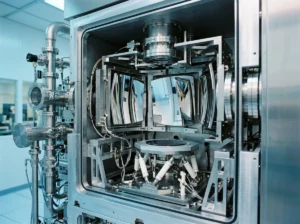
In semiconductor manufacturing, heaters are primarily used in vapor deposition (CVD), thermal oxidation, and annealing processes. These processes require heating wafers to over 1000°C in a vacuum environment. Heaters typically employ infrared lamps or resistance furnaces, coupled with PID controllers to ensure temperature uniformity of ±0.5°C.
For example, the power of an 8-inch wafer annealing furnace is usually between 20 and 40 kW. If the temperature deviation exceeds 2°C, it may cause uneven thickness of the gate oxide layer of the transistor, which directly affects the product yield.
Heat transfer mechanisms and engineering considerations
Heater design involves three main heat transfer mechanisms: conduction, convection, and radiation. Food processing relies heavily on steam conduction and hot air convection, while semiconductor manufacturing depends on radiant heating to prevent particulate contamination. Engineers need to consider the following factors when selecting a heater:
- heating rateWhether instantaneous heating (such as in a flue gas heating device) or long-term stable heating (such as in an industrial furnace) is required.
- Temperature rangeLow temperatures (50–150°C) are suitable for the food industry, while high temperatures (above 1000°C) are suitable for semiconductor processes.
- Energy efficiencyElectric heating is highly efficient, but gas heating is more suitable for large-scale industrial applications.
- SafetyFood and consumer products must avoid producing harmful byproducts, while the electronics industry must prevent pollution and static electricity.
Want to learn about high-temperature heat pumps, carbon reduction, heat recovery, COP, and steam boilers?
Further Reading :《High-temperature industrial heat pumpsA Win-Win Solution for Process Decarbonization and Energy Efficiency
Conclusion
From heating smoke to cooking, and even semiconductor manufacturing, heaters have demonstrated irreplaceable importance. These devices are not merely heating elements, but the core of the entire process, and their design and control precision directly affect product quality. With the development of energy transition and smart manufacturing, the next generation of heaters is evolving towards high energy efficiency, intelligent monitoring, and modularity. Understanding the physical principles and application scenarios of heaters not only helps improve industrial competitiveness but also allows us to better understand how "heat" shapes the products we use in our daily lives.