Copper has suddenly become a hot search term, seemingly a commodity or stock market theme, but looking at copper solely from a price perspective would mean missing its true place in engineering. Copper is not important because of its beautiful color, but because it possesses high electrical conductivity, high thermal conductivity, ease of processing, weldability, recyclability, and can be made into wires, copper foil, busbars, cold plates, and heat pipes within a mature supply chain.
In simple terms, copper is often used in modern technology for two main purposes: to deliver electricity and to bring heat out. These two tasks may sound basic, but in applications such as AI servers, data centers, electric vehicles, power modules, and advanced packaging, current density and heat flux are increasing. Material selection is no longer just a matter of cost, but rather a matter of reliability, efficiency, and space utilization.
This article does not predict copper prices, nor does it discuss any single stock. Instead, we use materials and systems design to understand why copper appears in wires, transformers, server power supplies, heat sinks, cold plates, heat pipes, and AI data centers.
What is the truly important aspect of copper?
The key to copper isn't just its electrical conductivity. Many metals conduct electricity, but few materials achieve a balance between conductivity, thermal conductivity, processability, bonding properties, corrosion resistance, and supply chain maturity. Silver performs better in both conductivity and thermal conductivity, but it's too expensive; aluminum is lighter and cheaper, but it has higher resistance for the same cross-section, and its contacts and creep require more careful handling.
When selecting materials, engineers typically don't just look at a single material list. For a power cable, they consider resistance, temperature rise, insulation class, bending radius, and terminal contact; for a cold-rolled steel plate, they consider heat transfer path, flow channel processing, corrosion, welding, and voltage drop; for a server bus, they consider space, current density, contact reliability, and maintainability. Copper's advantage lies in the fact that all these conditions are met simultaneously.
Therefore, unlike some new materials that only appear in a few high-end applications, copper is used extensively. It's found in everything from household wiring, motor coils, transformers, PCBs, and connectors, all the way to data center power architecture and liquid cooling modules. The higher the system power, the more difficult it is to ignore the role of copper.
Why is the power system so reliant on copper?
When current flows through a conductor, losses occur. The most basic relationship can be understood using I²R: the larger the current I and the higher the resistance R, the more heat is lost. This is why high-power devices pay special attention to conductor materials, cross-sectional area, contact area, and heat dissipation conditions. Electricity isn't just about "having a connection"; it's about ensuring it flows with low loss, low temperature rise, and long lifespan.
Copper has high electrical conductivity, so under the same current, resistance and temperature rise can be controlled with a more reasonable cross-sectional area. This is important for servers, power supplies, UPS, switchboards, transformers, and motors. When the current increases, the heat generated by the conductor itself becomes part of the system design; if the contact quality is poor, even if the main conductor is copper, hot spots may form due to excessively high local contact resistance.
Think of copper wires as highways. When traffic is light, a narrower road is still manageable; but when traffic increases, bottlenecks appear at ramps, toll booths, or construction zones. The same applies to electrical systems; wires, terminals, screws, plating, solder joints, and busbar bends can all become bottlenecks. The value of copper lies not only in the width of the main road but also in its ability to be processed into many reliable connection methods.
Why is copper suitable as a heat dissipation material?
Highly conductive materials often also have high thermal conductivity because free electrons in metals participate in both charge and heat transfer. Copper's thermal conductivity near room temperature is around 390–400 W/m·K, significantly higher than aluminum's approximately 200+ W/m·K, and also much higher than most stainless steels. This means that heat entering copper components from wafers, power devices, or contact surfaces can spread out more quickly, reducing localized hot spots.
Heat dissipation is not just about "throwing heat away," but about managing the entire thermal path. When a chip generates heat, it first passes through the package, thermal interface material (TIM), heat spreader, heat sink or cold plate, and then into the air or coolant. If the thermal resistance in any part of this path is too high, it will ultimately be reflected in the chip's temperature. To understand the role of thermal interface materials, you can refer to [further reading/contact information].Selection and limitations of thermal interface materials.
Common heat dissipation applications of copper include heat sinks, heat pipes, vapor chambers, microchannel cold plates, and power module bases. Its role is usually not to replace all materials, but rather to serve as a core component in areas with the highest heat flux and requiring rapid heat dissipation. Aluminum may be used for peripheral fins or structural components to balance weight, cost, and manufacturing efficiency.
Why do AI servers make copper more prominent?
What makes AI servers special is not just the high power consumption of a single chip, but the dense operation of a large number of GPUs, CPUs, HBMs, switching chips, power modules, and high-speed connections within the same rack. IEA aims for 2025...Energy and AI ReportThe report indicates that data centers will account for approximately 1.51 TWh of global electricity consumption in 2024, and this consumption may increase to approximately 945 TWh by 2030. This growth will transform data centers from "IT equipment" to "power and thermal management systems".
In AI servers, copper is used for both power and heat dissipation. The power side requires copper wires, copper busbars, busbars, and connectors to deliver power from the power supply to the motherboard and accelerator card. The heat dissipation side requires copper bases, copper cold plates, heat pipes, heat spreaders, and liquid cooling connectors to transfer heat from the chip to the coolant or heat dissipation module.
This is why liquid cooling is discussed alongside copper. When air cooling cannot effectively handle high power density, engineers bring the coolant closer to the heat source, commonly by placing it directly in contact with a cold plate above the chip. Cold plates typically require a metal with high thermal conductivity, fine flow channels, and reliable seals, making copper a common choice. To understand the relationship between data center cooling requirements and PUE, you can first look at...Basic concepts of TDP and PUE.
How do you choose between copper and aluminum?
Copper and aluminum are not mutually exclusive; it depends on the design requirements. Aluminum has a density about one-third that of copper, offering advantages in cost and weight, making it well-suited for large-area fins, casings, heatsink structures, and long overhead cables. Copper, on the other hand, excels in high current, high heat flux, small space requirements, and highly reliable contacts.
| Comparison items | 銅 | 鋁 |
|---|---|---|
| electrical conductivity | High performance, suitable for high current and low loss designs. | Lower values often require larger cross-section compensation. |
| Thermal Conductivity | High, suitable for cold plates, bases and hot spots to display heat. | Medium to high heatsink, suitable for large-area heat dissipation fins |
| density | Relatively heavy, approximately 8.9 g/cm³ | Lighter, approximately 2.7 g/cm³ |
| Processing and joining | It can be welded, brazed, and electroplated; the joints are mature. | Lightweight and easy to process, but contact points, oxidation, and creep must be controlled. |
| cost | Usually higher | Typically lower |
| Typical uses | Wires, busbars, cold plates, heat pipes, power modules | Heat sink fins, casing, bracket, overhead cables |
In practice, a hybrid copper-aluminum design is common. For example, a CPU cooler might use a copper base to contact the heat source, and then use aluminum fins to increase the heat dissipation area; a liquid cooling system might use a copper cold plate to handle the heat source, and the tubing and radiator are then selected based on cost, corrosion, and weight. The key to selection is not to pursue the strongest single material, but to place copper in the locations where high electrical and thermal conductivity are most needed.
Where is copper typically found in a high-power device?
When you turn on a high-power server, inverter, or electric vehicle power module, copper is usually not just a single wire, but an entire energy path. It may appear in the form of wires, copper busbars, terminals, copper foil, thermal pads, cold plates, heat pipes, or vapor chambers.
The first category is electrical transmission components, such as power cords, busbars, terminals, and connectors. These components must handle current, contact resistance, and temperature rise. The second category is thermal management components, such as copper bases, heat pipes, vapor chambers, and cold plates. Although heat pipes and vapor chambers rely on phase change for heat transfer internally, their outer shells and capillary structures are often made of copper because of its good thermal conductivity, proven manufacturing process, and ability to form reliable seals. Further reading can be found...The principle and application of heat pipes,as well asHow to quickly remove hot spots from a vapor chamber.
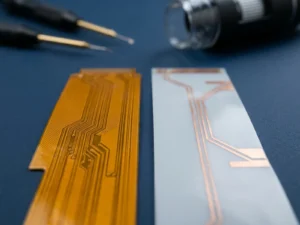
The third category is electronics and packaging-related materials, such as PCB copper foil, lead frames, power module substrates, and some package interconnects. Although different alloys, platings, and processes are used at different levels, the underlying logic is the same: to manage current and heat flow within a limited space.
Copper is not a universal material; what should be considered when designing it?
The first limitation of copper is its weight. When the design goal is to reduce weight, aluminum, magnesium alloys, composite materials, or hollow structures may be more suitable. This is why aerospace, automotive, and large-area heat sinks often use a hybrid design that combines copper and aluminum.
The second constraint is cost and supply fluctuations.USGS 2026 Copper Mineral Commodity SummaryData shows that copper and copper alloy products in the United States are used in construction, electrical and electronic, transportation, general consumer and industrial equipment, with copper recycling accounting for a significant proportion of the supply. This indicates that copper is not just a material for a single industry, but a basic metal used throughout the entire electrification and manufacturing system. The broader the demand, the more material costs, recycling, inventory, and alternative design need to be incorporated into engineering decisions.
The third limitation is corrosion and electrochemical compatibility. When copper and aluminum, different stainless steels, solders, coolants, or platings are placed together, attention must be paid to potential differences, coolant inhibitors, surface treatments, and sealing materials. Especially for liquid cooling systems, it's not just about the cooling plate itself; the piping, joints, pumps, water quality, corrosion inhibition, and maintenance strategies must also be considered. Choosing the wrong materials may only result in decreased efficiency in the short term, but in the long term, it can lead to leaks, blockages, or contact failures.
The value of copper lies in system efficiency, not just in its material price.
Copper's journey from traditional electrical wires to AI servers isn't due to being a new material, but rather because it solves two fundamental problems simultaneously in high-power-density systems: low-loss power delivery and rapid heat dissipation. The higher the current, the smaller the space, and the higher the heat flux, the more difficult it becomes to separate these two aspects.
However, understanding copper doesn't mean choosing copper for everything. Copper is heavy and expensive, and it also requires handling corrosion, bonding, and supply costs. Good design usually uses copper where it's most valuable, such as high-current paths, contacts, cold plate bases, heat pipes, and localized heat dissipation, while aluminum, plastics, steel, or composite materials handle the structure, weight, and cost.
In short, copper didn't suddenly become important in the AI era; rather, AI servers amplified power and heat dissipation issues to the point where they became unavoidable. When discussing the value of copper, the real question shouldn't be "Will copper prices rise?" but rather "What would be the cost in terms of efficiency, reliability, or space if copper weren't used in certain energy paths?" This is the core question that engineers truly care about when evaluating materials.