Table of Content
In today's rapidly evolving technological landscape, the computational demands of artificial intelligence (AI) and advancements in semiconductor manufacturing processes present a challenging situation. On one hand, the pursuit of higher computing power drives chip designs towards greater power density; on the other hand, the continuous miniaturization of semiconductor components exacerbates heat dissipation issues. With the increasing workload of AI training and inference, the power consumption of next-generation processors often exceeds 300 watts or even kilowatts. If the generated heat cannot be removed promptly, it can not only cause performance degradation but also shorten component lifespan or cause permanent damage. Against this backdrop, innovation in thermal management technology has become more crucial than ever. Traditional heat dissipation solutions, such as pure copper heat pipes or heat pipe designs, often fall short in modern high-power-density applications. Especially when dealing with extreme hot spots, the temperature of the heat source area can be significantly higher than the surrounding area, posing a risk of localized overheating. This has spurred the rapid development and widespread application of vapor chamber technology. Vapor chambers, with their unique phase change principle and excellent heat diffusion characteristics, can evenly dissipate heat from hot spots to a larger area in a very short time, significantly reducing localized temperatures. This technology not only solves the heat dissipation problem of high-power components, but also opens up new possibilities for the thermal design of next-generation AI accelerators, high-performance computing centers (HPCs), and edge computing devices. In commercial applications where stability and reliability are paramount, the importance of heat sinks is increasing daily. This article will explore this unique heat dissipation technology, from its basic principles to practical applications, to help you understand why it has become an indispensable key component in modern high-performance electronics.
Want to learn about heat dissipation, thermal design power, power utilization, thermal management, and direct liquid cooling?
Further Reading :What are TDP and PUE? Understanding Thermal Requirements and Solutions
What is a vapor chamber?
A vapor chamber is a high-performance heat dissipation component, essentially a precisely designed flat, sealed container. This container is typically only a few millimeters thick, but its internal structure is extremely intricate, incorporating special capillary structures and a specialized working fluid. Visually, vapor chambers present a flat rectangular or other geometric shape, perfectly conforming to the surface of various electronic components. Structurally, the outer shell of a vapor chamber is usually made of highly thermally conductive pure copper or aluminum, while the interior is filled with a specific ratio of working fluid, most commonly...Deionized waterOr other refrigerants with suitable boiling points. The inner wall of the container is covered with a sophisticated capillary structure, which may be sintered powder, grooves, mesh, or a composite design. The design of these capillary structures directly affects the heat dissipation efficiency of the vapor chamber. Their main function is to provide channels for the flow of the working fluid and generate sufficient capillary force to maintain fluid circulation. From a functional perspective, a vapor chamber can be regarded as a highly efficient "heat transporter." It can quickly and evenly diffuse the heat generated by electronic components from a smaller heat source area to a larger heat dissipation area. This heat diffusion efficiency far exceeds that of traditional pure copper or aluminum heat sinks, and its equivalent thermal conductivity can be several to tens of times that of pure copper. This means that under the same temperature difference conditions, a vapor chamber can conduct more heat or maintain a lower temperature difference under the same heat load. Another important feature of a vapor chamber is its excellent isothermal properties. Under normal operating conditions, the temperature distribution on the surface of the vapor chamber is quite uniform, and the temperature difference can usually be controlled within a few degrees. This characteristic makes it particularly suitable for handling heat dissipation problems with localized high heat flux densities, such as the high power density areas in modern processors. The heat diffusion effect of the heat spreader can effectively prevent the generation of hot spots and reduce the maximum operating temperature of the components.

vapor chamber vs. traditional heat dissipation solutions
Compared to traditional heat dissipation solutions, vapor chambers exhibit several significant advantages. In terms of heat dissipation efficiency, traditional pure copper heat sinks are limited by the thermal conductivity of copper itself, resulting in relatively slow heat diffusion. While heat pipes also utilize the principle of phase change, their one-dimensional tubular structure restricts the direction of heat diffusion. In contrast, the two-dimensional planar structure of a vapor chamber enables omnidirectional heat diffusion, and its equivalent thermal conductivity can reach 5-10 times that of pure copper, significantly improving heat dissipation efficiency.
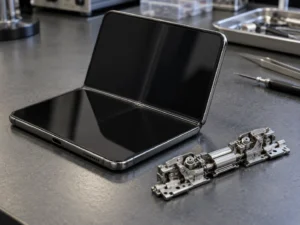
In terms of product design flexibility, vapor chambers offer a more significant advantage. Traditional heat pipes, due to their cylindrical structure, require a large amount of space during installation and have limited bending angles, making them difficult to integrate into complex mechanical designs. Vapor chambers, on the other hand, can be manufactured in various shapes, with a thickness as thin as 0.3mm, facilitating integration into products such as ultra-thin laptops or foldable phones. Furthermore, the flat structure of vapor chambers provides a larger contact area, directly covering the entire heat-generating element and reducing thermal resistance.
In terms of temperature uniformity, traditional heat sinks and heat pipes often exhibit significant temperature gradients, especially in areas far from the heat source. Heat spreaders, on the other hand, can maintain a temperature difference across the entire surface within 2-3 degrees Celsius, effectively preventing localized overheating. This superior isothermal characteristic makes it an ideal choice for high-end electronic products, particularly in high-power-density applications.
Conclusion
From consumer electronics to industrial computing devices, vapor chambers are redefining the possibilities of thermal management with their superior heat dissipation performance and design flexibility. This innovation not only provides solutions to current thermal challenges but also paves the way for more challenging future applications. With advancements in manufacturing processes and breakthroughs in materials science, vapor chamber technology still has enormous potential for development. Innovations such as the development of novel capillary structures, the application of composite materials, and nanoscale surface treatments are all likely to further enhance vapor chamber performance. Especially in cutting-edge fields such as upcoming 6G communications and quantum computing, more efficient thermal solutions will play a crucial role. In an era focused on sustainable development, vapor chamber technology not only improves product performance but also contributes to reducing carbon emissions by increasing energy efficiency. It is foreseeable that with the continued growth in demand for thermal management, vapor chamber technology will shine in a wider range of fields, continuously driving technological innovation and progress in electronic products. This is not only an evolution of thermal management technology but also a crucial cornerstone for realizing the next generation of electronic products.